River stone and driftwood: your first hardscape
How to choose, clean and place stone and wood so your tank looks natural, and how to prepare driftwood before it goes in.
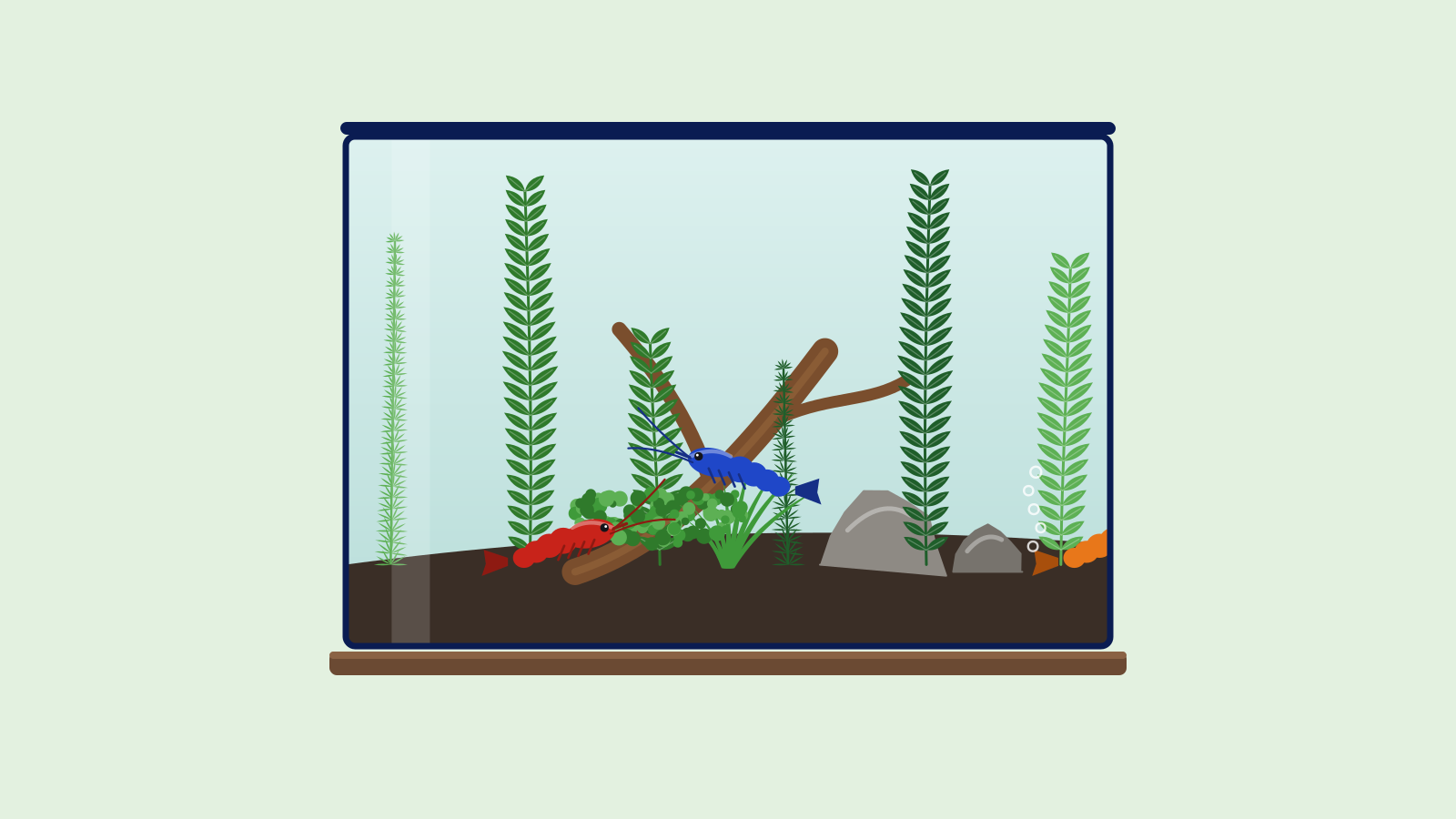
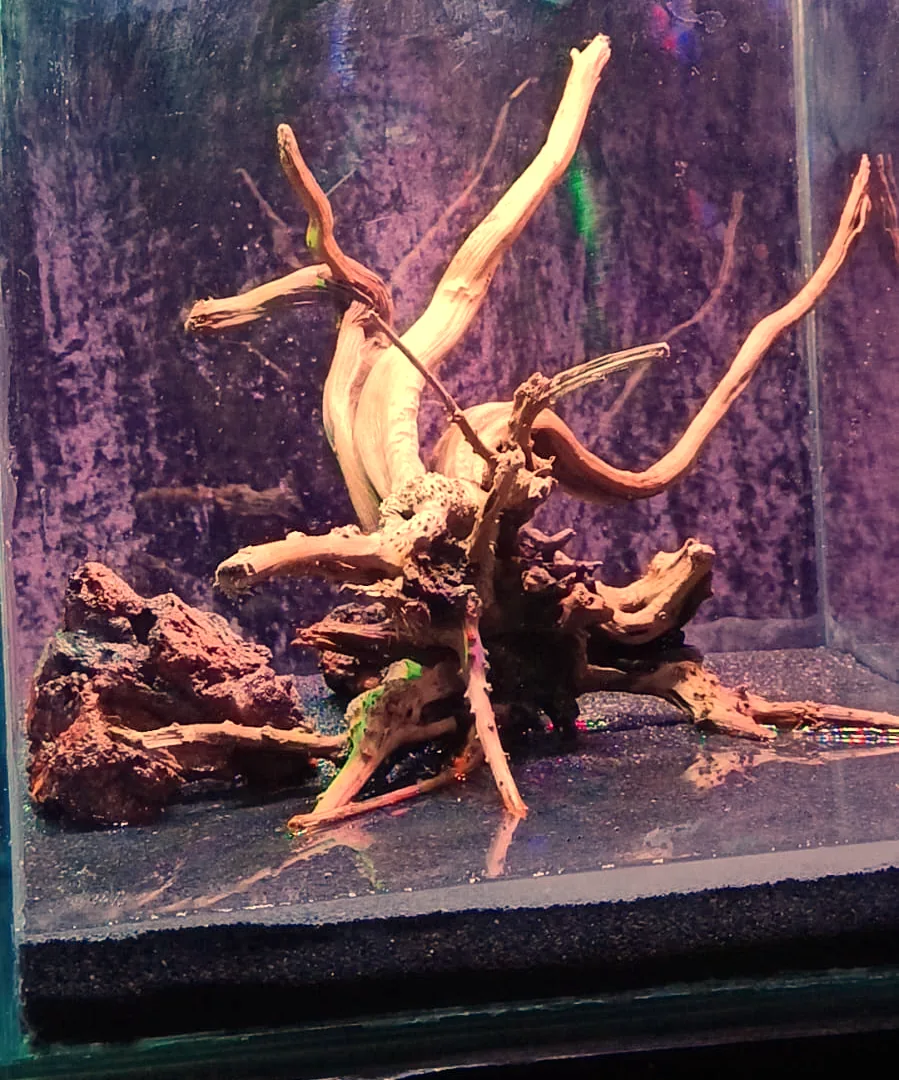
Hardscape is the stone and wood that gives a tank its shape. Get it right and even a simple tank looks like a piece of nature. Plants grow around it, moss grows on it, and shrimp spend their days grazing over it.
Everything we sell is natural. Nothing is painted, dyed, varnished or plastic, and nothing in your tank should be.
Choosing stone
- Pick inert stone. River stone, granite, basalt and slate usually don’t change your water. See our Rocks and Stones.
- Do the vinegar test on stone you’re not sure about. Put a few drops of vinegar on it. If it fizzes, it contains carbonate (like limestone) and will slowly raise hardness and pH. A little is fine for Neocaridina, but a tank full of it isn’t.
- Avoid garden, roadside and construction stone. It can carry fertiliser, pesticide, cement or metal. Stones with shiny metallic streaks or rusty patches stay out.
- Choose a family. Stones of the same colour and texture look natural. A mix of everything looks like a gravel pile.
Preparing stone
- 1Scrub it with a stiff brush under running water. No soap, no detergent.
- 2Soak it in a bucket of water for a day and check the water stays clear.
- 3Don’t boil stone. Water trapped inside some stones can make them crack in boiling water.
Choosing and preparing driftwood
- Use wood sold for aquariums, like our Driftwood. Wood picked up outdoors is risky. It can rot, carry sap or pesticide, and some local woods are toxic.
- 1Rinse and scrub off any loose dirt.
- 2Soak it in a bucket for 1–2 weeks, changing the water every few days. This waterlogs it so it sinks, and lets out most of the tannins.
- 3Boil small pieces if they fit in a pot. An hour of boiling speeds up both sinking and tannin release.
- 4If it still floats, wedge it under a stone or tie it to a flat stone until it waterlogs.
Tannins turn the water a tea colour. It’s harmless, and many shrimp and fish keepers add almond leaves on purpose to get the same effect. Regular water changes clear it over a few weeks.
A white, fuzzy coating on new wood in the first weeks is normal. It’s harmless, shrimp love to graze it, and it disappears on its own. Don’t treat it with anything.
Placing it: simple rules that work
- 1Pick one main piece. One large stone or one striking piece of wood is the star. Everything else supports it.
- 2Use odd numbers. Three or five stones look more natural than two or four.
- 3Use different sizes. One big, a couple of medium, a few small.
- 4Place the main piece off-centre, about a third of the way across the tank, not in the middle.
- 5Point everything the same way. Tilt stones in the same direction and follow the lines of the wood, like rocks shaped by the same river.
- 6Bury stones by about a third, so they look like they’re growing out of the ground, not sitting on it.
- 7Slope the soil, higher at the back and lower at the front. The tank looks deeper.
- 8Leave open space. An open area of sand or soil gives the eye somewhere to rest and gives shrimp room to forage.
Put heavy stones on the glass bottom first and build the soil around them. A heavy stone placed on top of soil can sink, shift and crack the glass when you dig around it later.
Adding plants and moss
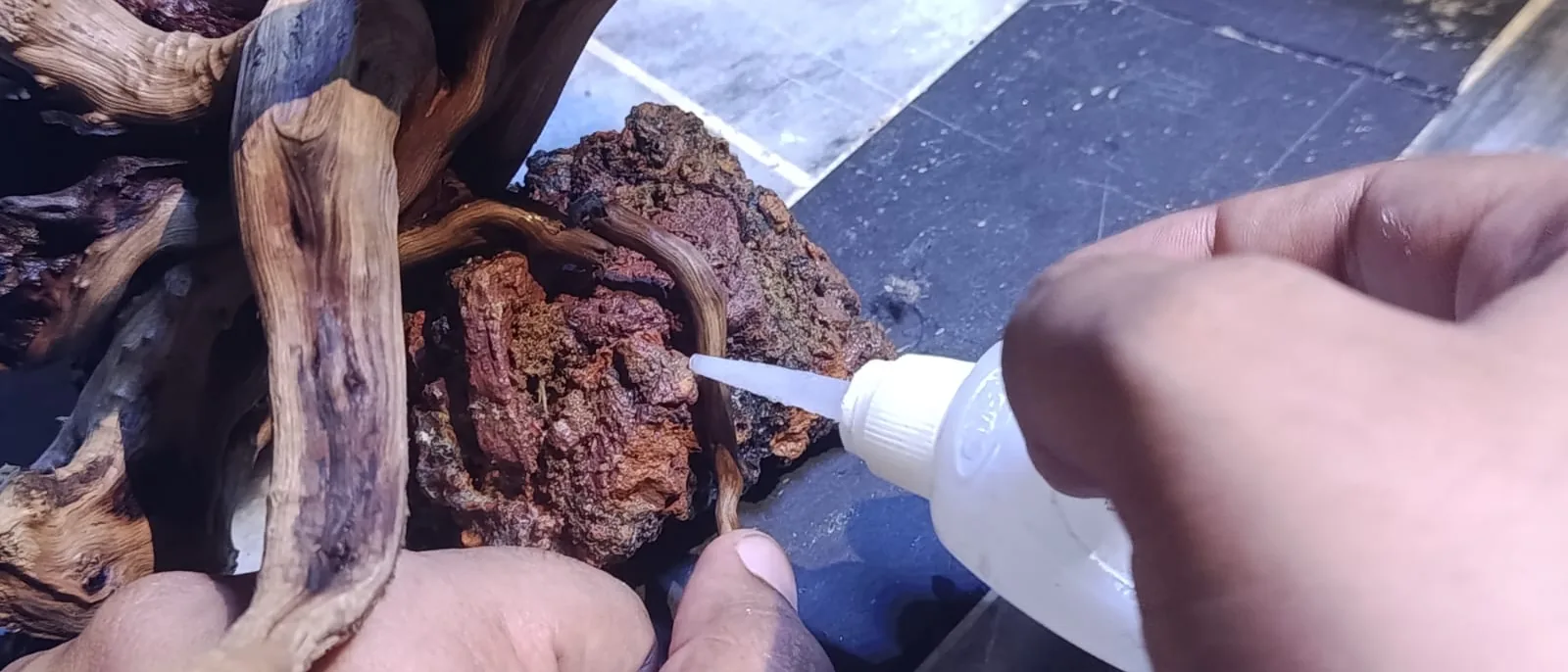
Tie moss onto wood or stone with cotton thread, or stick it with a dot of gel superglue. Within a few weeks it grows on by itself. Plant stem plants behind and between the hardscape so they frame it.
Read: Easy live plants for your first tank