How to cycle a new tank before adding livestock
Why a new tank needs a few weeks before anything lives in it, how to cycle it without fish, and how to tell when it’s ready.
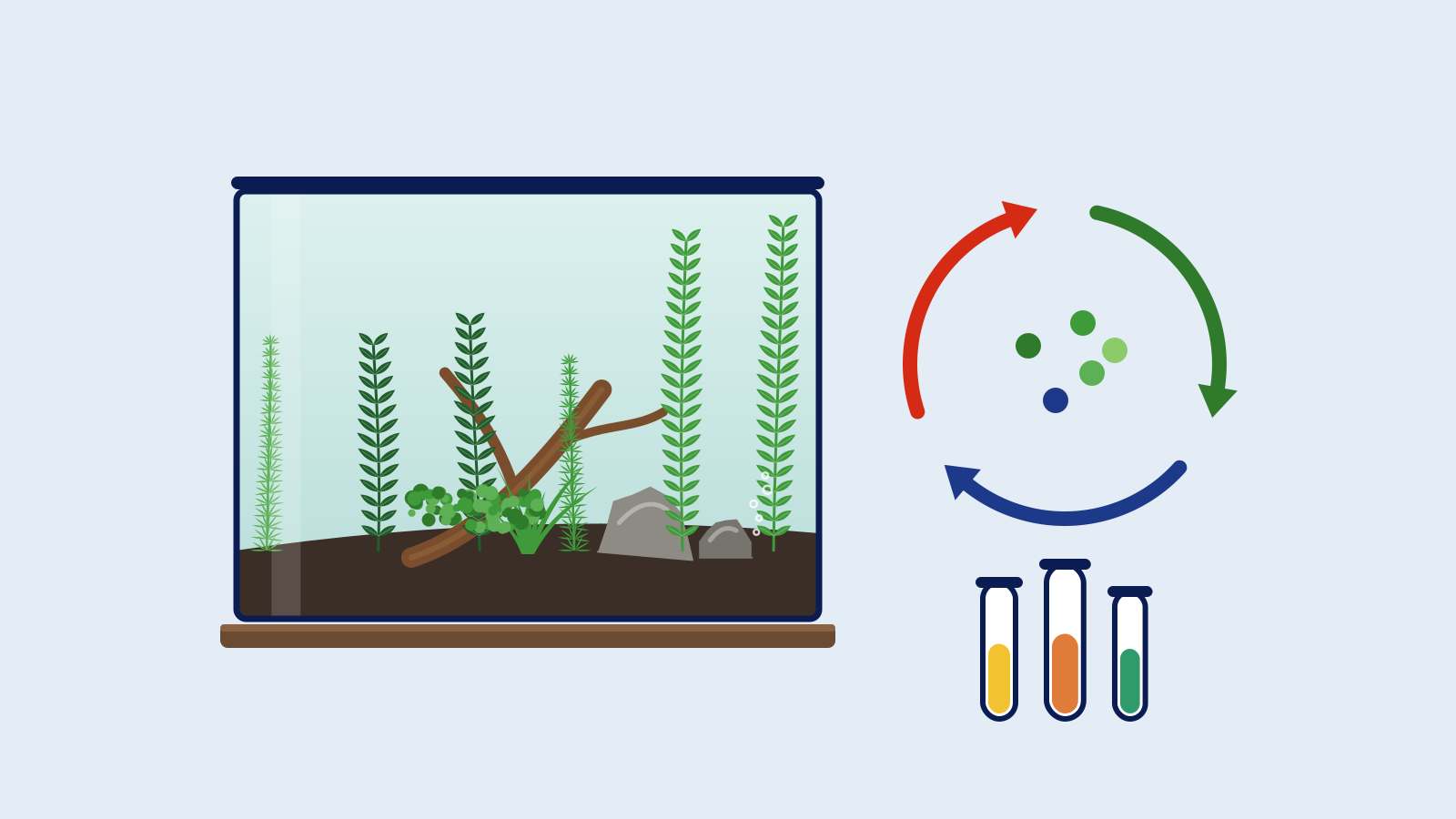
A brand-new tank looks clean, but it isn’t ready for life. Shrimp and fish produce waste that breaks down into ammonia, and ammonia burns their gills. In an established tank, colonies of good bacteria turn that ammonia into safer substances before it can do harm. A new tank has almost none of these bacteria yet.
Cycling means growing those bacteria before anything lives in the tank. It is the single most important step for a beginner, and skipping it is the most common reason first tanks fail.
How the cycle works
- 1Ammonia comes from waste, leftover food and anything rotting. It is highly toxic.
- 2Nitrite is made when the first group of bacteria eats the ammonia. It is also toxic.
- 3Nitrate is made when a second group of bacteria eats the nitrite. It is far less harmful, and you remove it with regular water changes. Plants use some of it too.
The good bacteria live on surfaces: the filter sponge, the soil, stones, wood and plant leaves. Very few float in the water itself. That’s why you never wash a filter sponge under the tap, and why a used sponge from a healthy tank is the best shortcut there is.
What you need
- The tank, fully set up with soil, hardscape, plants and a running filter.
- A liquid test kit that measures ammonia, nitrite and nitrate. Strips are less accurate but better than nothing.
- An ammonia source. A pinch of fish food every day works. Pure ammonia sold for fishless cycling is faster and easier to measure.
- Water conditioner for every bucket of tap water.
- Patience. Expect 3 to 6 weeks. It can be as quick as 2 or as slow as 8.
Fishless cycling, step by step
- 1Set everything up and run the filter 24 hours a day. The bacteria need oxygen and water flowing over the surfaces they live on. Never switch the filter off at night.
- 2Add an ammonia source every day. Drop in a small pinch of fish food, about what you would feed a few fish, or dose pure ammonia to about 1–2 ppm.
- 3Test every 2–3 days and note the results. First ammonia rises. After a week or two nitrite appears and ammonia starts to fall. Later nitrite falls and nitrate rises.
- 4Keep feeding the tank until it’s cycled. If you stop, the bacteria starve.
- 5Do the final check. Add your normal daily ammonia source, wait 24 hours and test. If ammonia and nitrite both read 0 and nitrate is showing, the tank is cycled.
- 6Do a big water change with conditioned water at the same temperature to bring nitrate down to under 30 ppm, then add your livestock within a day or two so the bacteria don’t go hungry.
If ammonia or nitrite still shows after 24 hours, the tank isn’t ready. Adding shrimp now is how whole colonies are lost in the first week.
How to speed it up
- Seed it. Squeeze a used sponge from a healthy, established tank into your filter, or put a piece of used filter media in your filter. This can cut the cycle to a week or two. Ask us on WhatsApp if you’re not sure how.
- Plant heavily. Fast-growing stem plants use ammonia and nitrate and carry bacteria on their leaves.
- Keep it warm and well aerated. Bacteria grow faster in warm, oxygen-rich water, so an air pump helps.
- Don’t clean too much. Leave the filter sponge alone during cycling.
Water from an established tank helps a little, but most of the good bacteria live on surfaces, not in the water. A used sponge or piece of filter media makes by far the biggest difference.
Signs something is wrong
- Nothing changes for 2–3 weeks. Check that the filter runs all day and that you’re adding food or ammonia daily. Very soft water or a low pH can slow the bacteria down.
- Ammonia shoots very high. You’re adding too much. Do a partial water change and add less.
- Cloudy white water. Usually a harmless bacterial bloom in a new tank. It clears on its own in a few days. Don’t panic-clean the filter.
After the cycle
Add livestock slowly. A cycled tank can only handle the amount of waste it was built for, so start with a small group and add more over the following weeks. Keep testing weekly for the first month.
Read: Acclimating your new shrimp and fish, step by step