Neocaridina shrimp: a beginner’s setup guide
What cherry shrimp and their colour cousins need, how to set up their tank, and the mistakes that kill most first colonies.
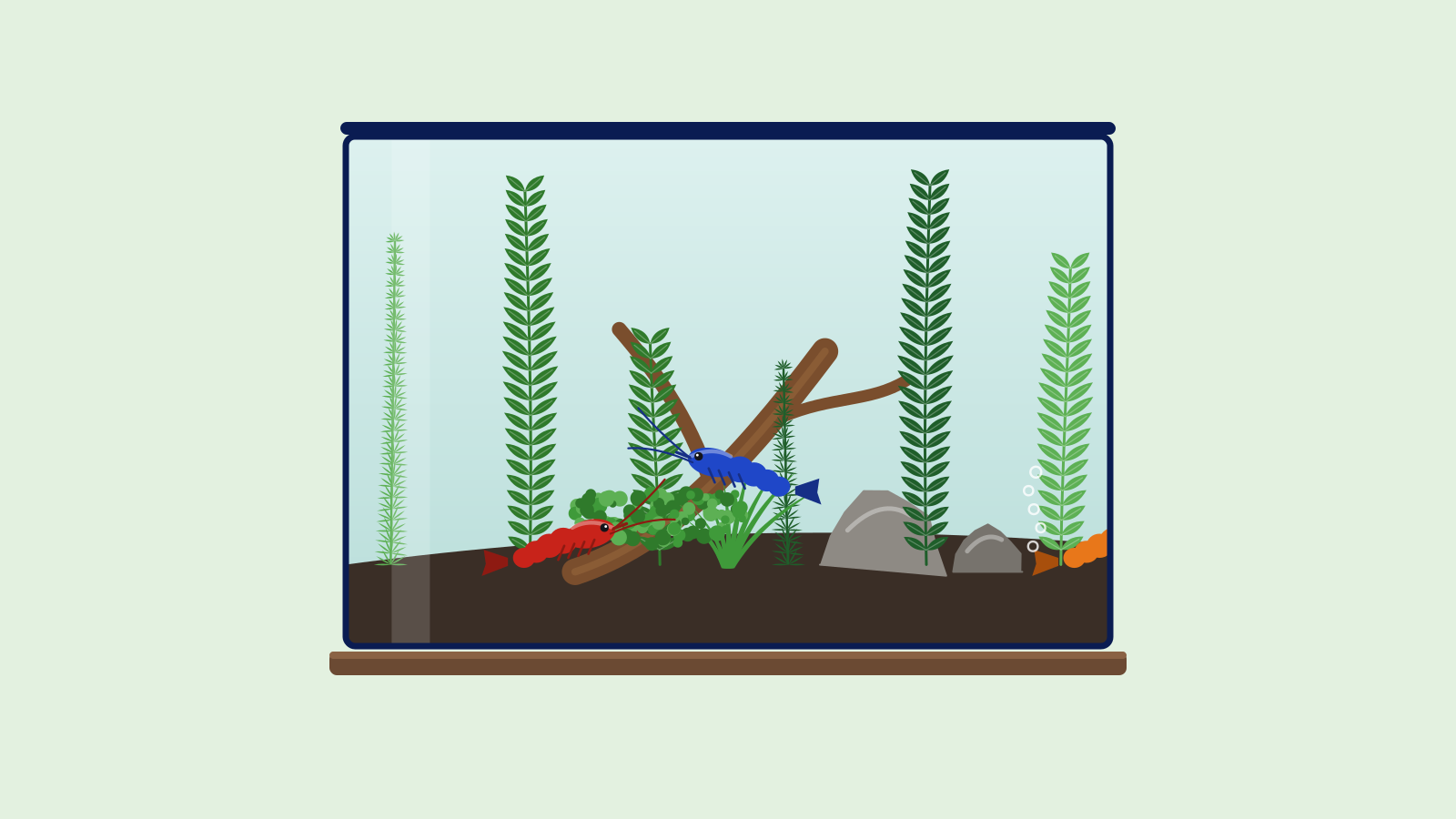
Neocaridina are the easiest shrimp to start with. They’re peaceful, hardy and busy all day, grazing on plants, wood and stone. Red Cherry, Blue Dream, Black Rose, Orange Sakura, Golden Yellow, Green Jade and the clear wild form are all the same species, Neocaridina davidi, so they all need the same care.
Get the basics below right and a small group will breed on its own. A pair can become a colony of dozens within a few months.
Quick facts
- Adult size
- 2–3 cm
- Temperature
- 20–23 °C
- pH
- 7.0–7.8
- GH
- 7–10 dGH
- KH
- 3–6 dKH
- TDS
- 180–250 ppm
- Lifespan
- 1–2 years
- Level
- Beginner
Females are a little bigger and more strongly coloured. When they carry eggs under their tail, they’re called “berried”. The eggs hatch in about 3 to 4 weeks into tiny, complete shrimp, with no larval stage.
What you need
- A tank of about 20–40 litres. More water stays stable for longer, and shrimp love stable water. They can live in less, but small tanks swing in temperature fast in a Pindi summer.
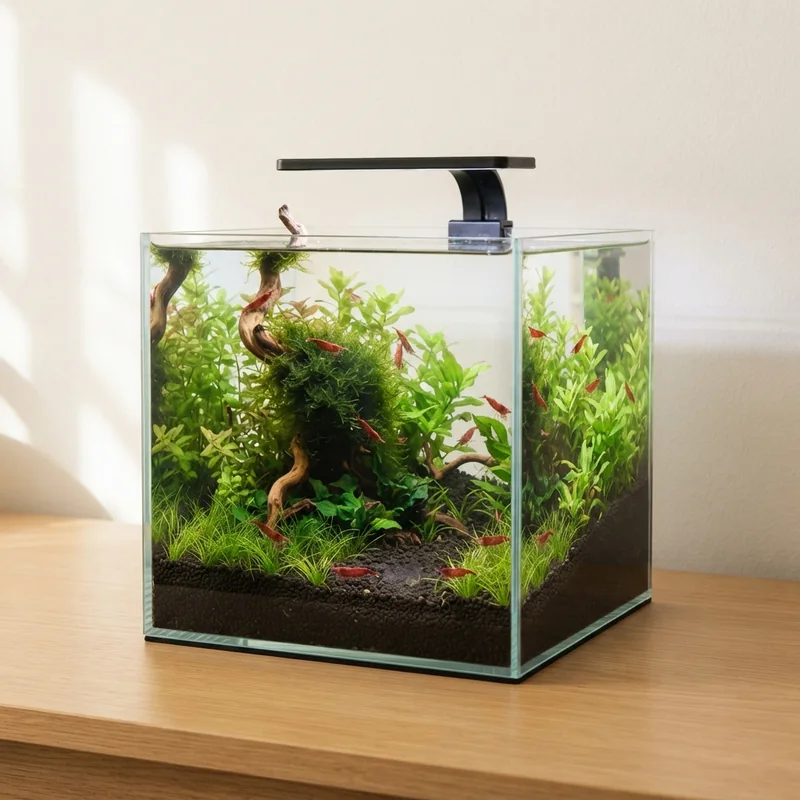
- A sponge filter and a small air pump. The flow is gentle, baby shrimp can’t get sucked in, and the sponge grows a film of food they graze on. See our Sponge Filter. A small tank with only a few shrimp and lots of live plants, like our Shrimp Starter Kit, can run without one: the plants keep the water clean.
- Plant soil or plain gravel, plus natural stone or wood if you like. Dark soil makes the colours stand out.
- Live plants, especially moss. Shrimp graze on it all day and babies hide in it. Java Moss is the classic.
- Shrimp food. A small pinch a few times a week. Most of their food comes from the film on plants and wood.
- A water conditioner to remove chlorine from tap water.
- A test kit for ammonia, nitrite and nitrate, so you know when the tank is ready. A cheap TDS meter is also worth having.
- A thermometer. In June it will be the most important thing you own.
Your water
Tap and bore water in Rawalpindi and Islamabad changes a lot from area to area, so check yours before you start. A cheap TDS meter is the quickest way.
- Aim for roughly 180–250 ppm, and more importantly, keep it steady from week to week.
- If your water reads much higher, mix it with RO or filtered drinking water until it comes down into that range.
- Don’t use RO water on its own. It has almost no minerals, and shrimp need minerals to grow new shells. Mix it with tap water.
- Treat every bucket of tap water with conditioner before it touches the tank.
Not sure about your reading? Send it to us on WhatsApp and we’ll tell you what to do.
Set it up, step by step
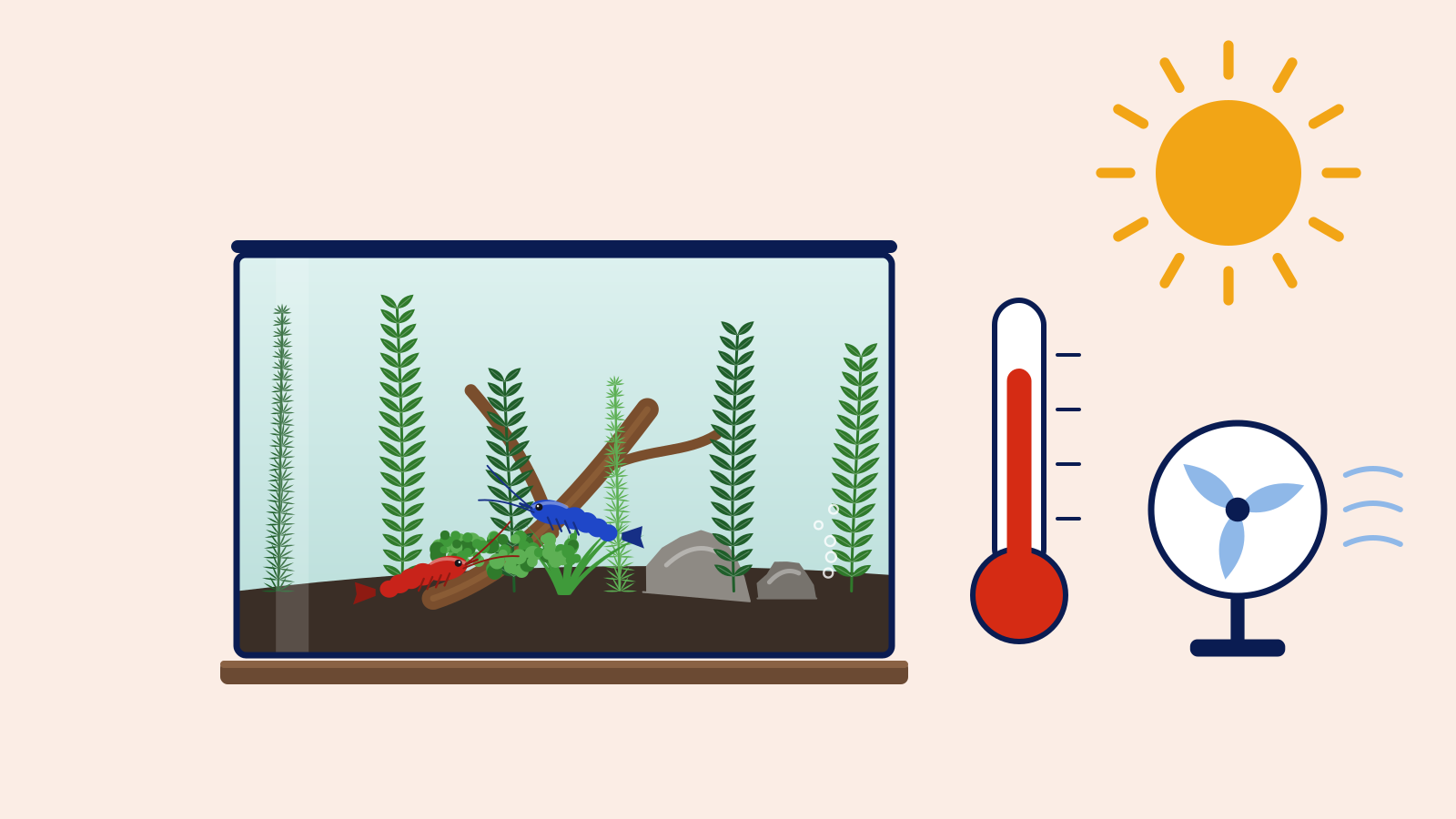
- 1Pick the spot. A sturdy, level surface in the coolest room you have, out of direct sun and away from heaters, stoves and west-facing windows. Sun heats the water and grows algae.
- 2Build the tank. Add soil, then stone or wood, then plants. Fill it with tap water treated with conditioner, and start the filter.
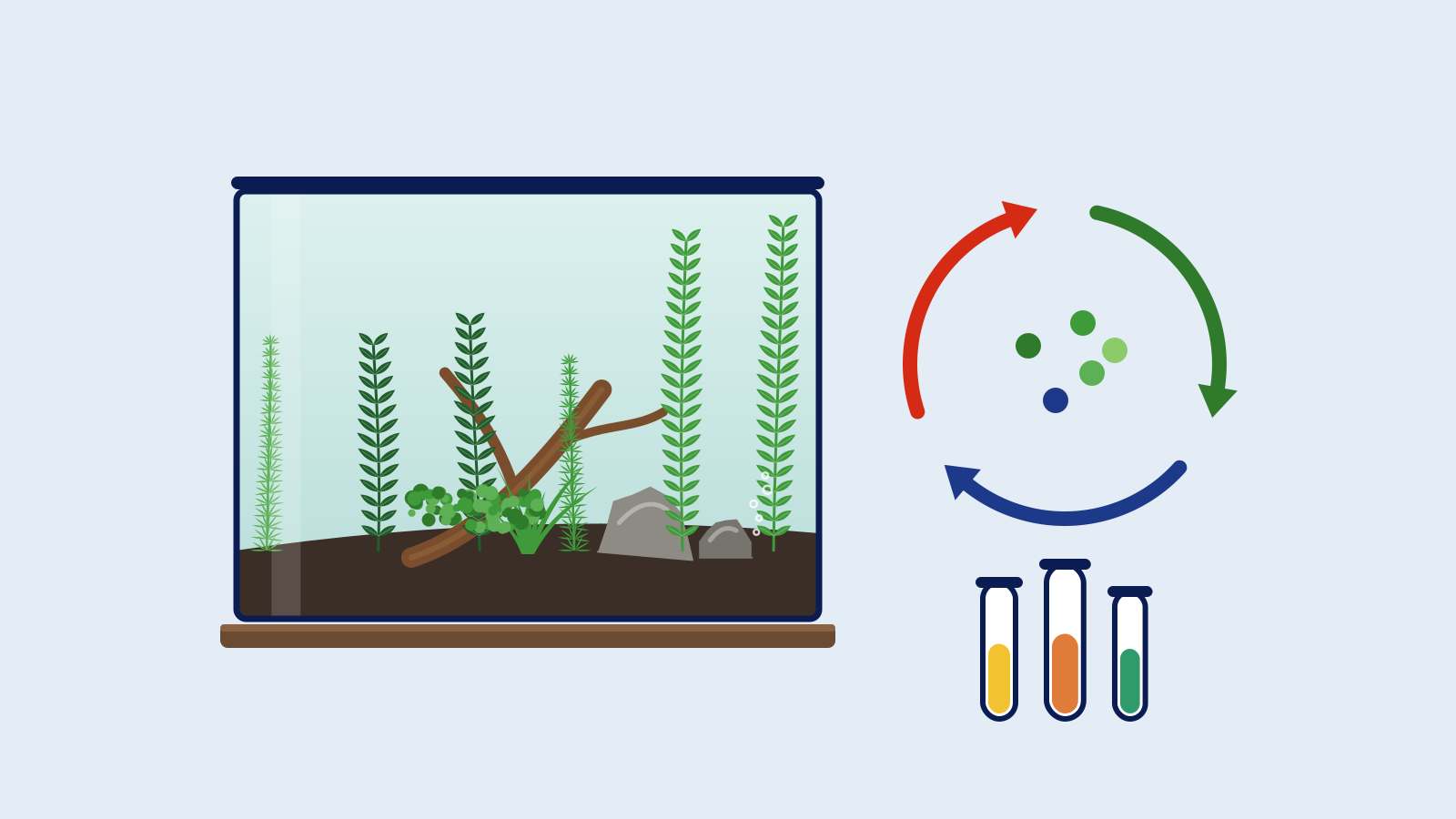
- 3Let it cycle. This usually takes 3 to 6 weeks. It’s ready when ammonia and nitrite both read 0 and nitrate is under 30 ppm.
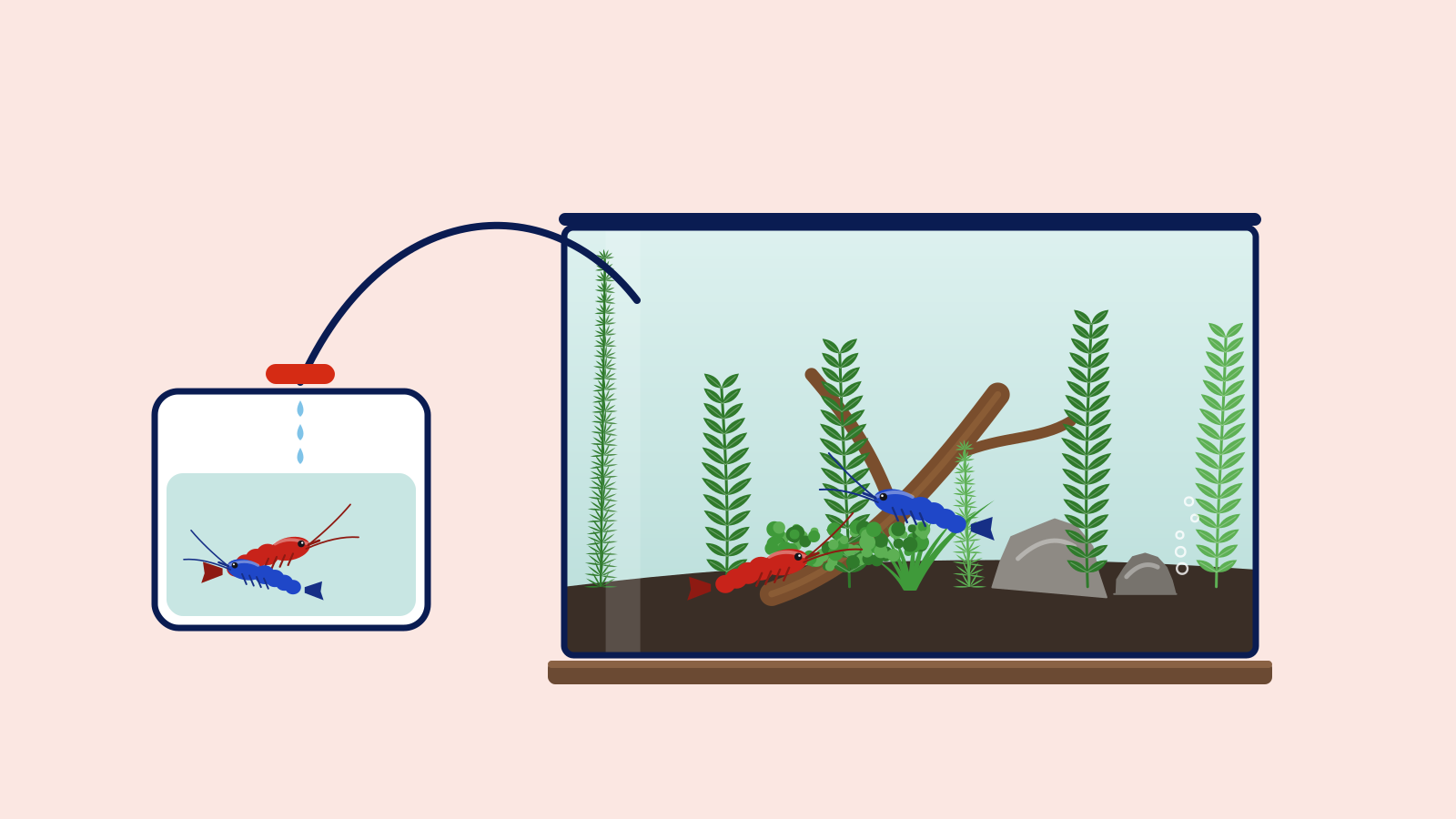
- 4Add your shrimp slowly. Drip your tank water into their container for 1–2 hours before netting them in. Never pour the bag water into your tank.
- 5Keep it steady. Feed lightly and take out food they leave after a couple of hours. Change 10–20% of the water every week, using conditioned water at the same temperature.
Feeding
Shrimp spend the whole day picking at biofilm, algae and decaying leaves. Extra food is a treat, not their main meal.
- Feed a pinch every second or third day, only as much as they finish in about 2 hours.
- Take out anything left over. Rotting food fouls the water quickly.
- An Indian almond leaf is a good long-lasting snack. Shrimp graze on it as it softens.
- Skip feeding for a day or two if the tank looks cloudy or the shrimp aren’t interested.
Summer in Pakistan: keep it cool
Shrimp do best at 20–23 °C and can survive up to about 28 °C for short spells, but warm water holds less oxygen and shortens their lives. In June and July:
- Keep the tank out of direct sun, even for an hour a day.
- Run a small fan across the water surface. Evaporation cools the water.
- Top up evaporated water with conditioned water, not straight from the tap.
Common mistakes
- Adding shrimp too soon. A tank that hasn’t finished cycling can kill a whole colony in days.
- Overfeeding. Leftover food fouls the water quickly. Less is better.
- Copper. Many fish medicines contain copper, which is deadly to shrimp. Read the label of anything you add.
- Big or fast fish. Most fish will eat shrimp or their babies. Check before you add any.
- Big, sudden water changes. A large change with water of a different temperature or hardness can cause failed moults. Small and regular is safer.
- Mixing colours. All colours breed together, and after a few generations the babies turn a dull brown. Keep one colour per tank.