Easy live plants for your first tank
Water wisteria, Hygrophila and Java moss are hardy, grow quickly and give shrimp plenty to graze on. How to plant them and keep them growing.
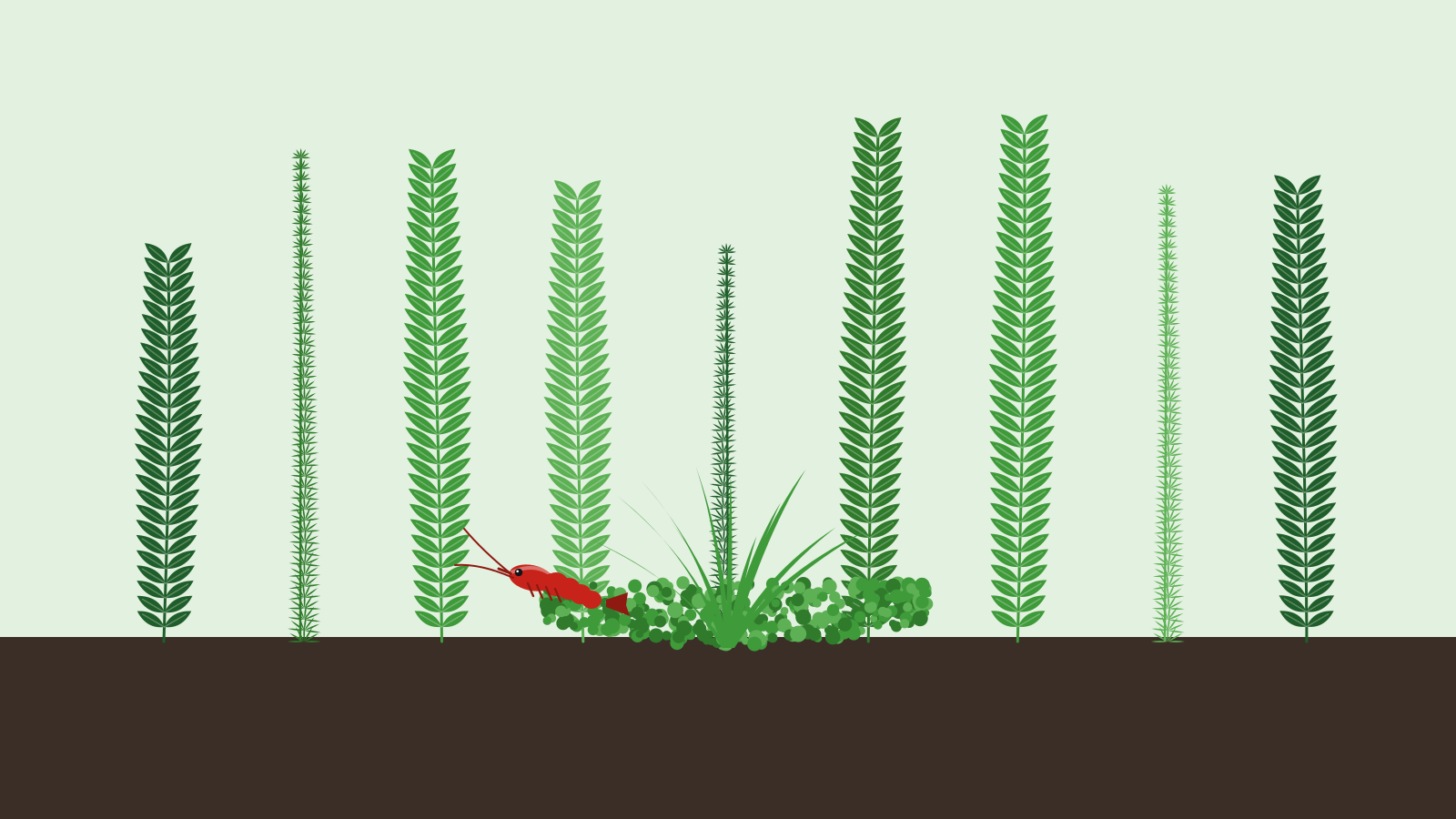
Live plants are what make a tank alive. They use up waste, add oxygen during the day, compete with algae, and give shrimp a place to graze and babies a place to hide. The plants below are the ones we grow and sell, and most of them are very forgiving.
The easiest to start with
- Water Wisteria: fast, bright green, lacy leaves. Almost impossible to kill.
- Hygrophila corymbosa: broad leaves, grows quickly and soaks up waste.
- Hygrophila triflora: another easy Hygrophila. Hardy, quick to settle and happy in most water.
- Limnophila sessiliflora: soft, feathery and fast. Great for filling the back of a tank.
- Bacopa: thick, round leaves on upright stems. Slower but tough.
- Java Moss and Christmas Moss: no soil needed. Tie them to wood or stone. The best thing you can give shrimp.
A step up
These are beautiful but want stronger light and steadier care. Add them once the easy plants are thriving.
- Stargrass: bright green star-shaped leaves. Needs good light to stay compact.
- Parrot Feather: grows naturally with its tips above the water. Fully under water it slowly weakens unless the light is strong.
- Riccia: a floating plant that can also be tied down to make a green carpet. Needs good light and nutrients.
Light
- 6–8 hours a day is enough. More light than that mostly grows algae.
- Use a timer so the hours are the same every day. Plants and shrimp both like routine.
- A basic LED Aquarium Light over the tank is enough for the easy plants.
Planting stem plants
- 1Separate the stems. A bunch of 6 is six separate plants. Plant them one by one, not as a tight bundle.
- 2Strip the bottom leaves. Remove leaves from the lowest 2–3 cm of each stem. Buried leaves just rot.
- 3Push each stem 3–5 cm into the soil with tweezers or your fingers.
- 4Leave a little space. About 1–2 cm between stems lets light reach the lower leaves.
- 5Tallest at the back, shorter in front, so nothing is hidden.
Tying moss
- 1Spread a thin layer of moss over the wood or stone. Thin is better than thick, because the underside of a thick clump goes brown.
- 2Wrap it loosely with cotton thread or fishing line, or stick it with small dots of gel superglue.
- 3In a few weeks it attaches itself. Cotton thread simply rots away.
Trimming and replanting
When a stem reaches the water surface, cut the top 10–15 cm and plant the cut top in the soil. The bottom part grows new side shoots, so one bunch slowly fills the tank for free. Trim moss with scissors like a haircut, and remove any loose bits so they don’t drift into the filter.
Feeding your plants
- Plant soil feeds roots for many months. With plain gravel or sand, push a root tablet near the roots every few months.
- Liquid fertiliser helps fast growers, but keep the dose low in a shrimp tank.
Copper kills shrimp. Many fish medicines contain copper, and some fertilisers do too. Only use products that say they are shrimp-safe, and dose on the low side.
When new plants arrive
Plants can look a little tired after the trip, and a few older leaves may melt away in the first week. That’s normal. Once planted, they usually perk up within a couple of days and start putting out new growth. Live plants can also carry a few tiny snails. They’re harmless and help clean up.
Read: River stone and driftwood: your first hardscape