Keeping shrimp cool through a Pindi summer
Shrimp do best at 20–23 °C, and Rawalpindi averages around 40 °C in June. Simple ways to keep your tank cool through June and July.
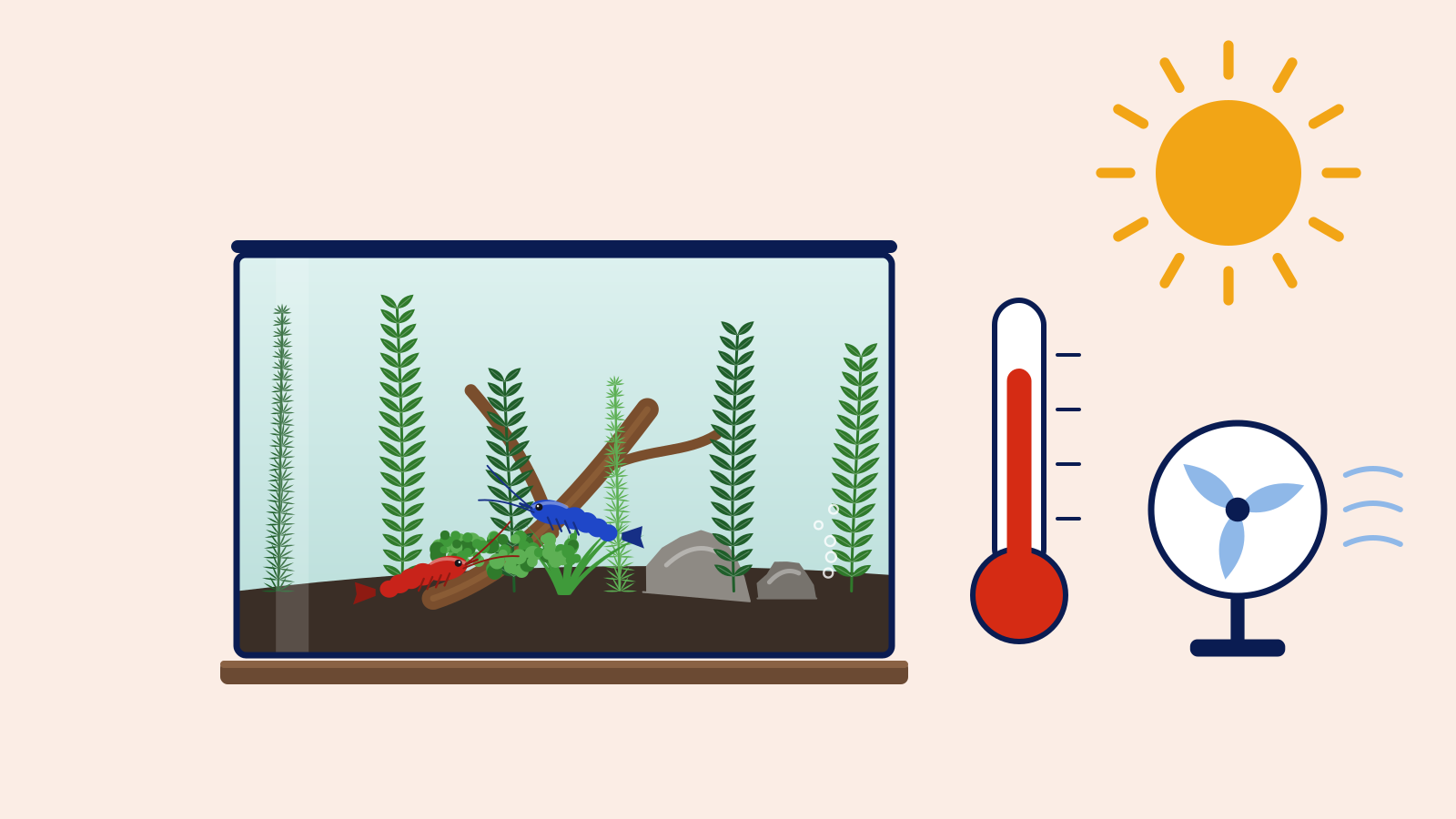
Summer is the hardest time of year for shrimp in Pakistan. Rawalpindi averages around 40 °C in the afternoons in June, and many days go well above that. Neocaridina do best at 20–23 °C and start to struggle as the water passes about 28 °C.
Heat is dangerous in two ways. Warm water holds less oxygen, and warm water speeds up everything in the tank, from the shrimp’s metabolism to rotting food. A tank that was fine in March can crash in a June afternoon.
- Ideal
- 20–23 °C
- Still OK
- up to about 26 °C
- Danger zone
- above 28 °C
- Rawalpindi in June
- around 40 °C average high
Measure first
Buy a digital thermometer and check it in the hottest part of the day, usually 3–5 pm. You can’t fix what you don’t measure, and the room can feel cool to you while the water is creeping up.
Where the tank lives
- The coolest room in the house, ideally one that runs an AC in the afternoon.
- Never in direct sun, even for an hour. Morning sun through a window is enough to heat a small tank by several degrees.
- Away from west-facing walls and windows, which soak up afternoon heat.
- Low down rather than high up. Hot air collects near the ceiling.
- Not on top of a fridge, router or UPS, which all give off heat.
Fans: the cheapest, best fix
A small fan blowing across the water surface cools the tank by evaporation. Fans usually bring the water down about 2–4 °C, which is often the whole difference between safe and dangerous.
- 1Take the lid off or open it, so moist air can escape. With a closed lid, a fan does almost nothing.
- 2Point the fan across the surface, not into the water. A clip-on aquarium fan or a small USB desk fan both work.
- 3Top up every day. Evaporation can take a centimetre or more a day. Top up with conditioned water only, not straight tap water.
Evaporation leaves minerals behind. If you only ever top up, TDS slowly creeps up. Keep doing your normal weekly water change too.
More ways to keep it cool
- Cut the light time. Lights add heat. Run them 6 hours instead of 8, and not during the hottest part of the afternoon.
- Add air. An air pump or sponge filter adds the oxygen that warm water lacks.
- Feed less. Shrimp need less in the heat, and leftover food rots fast.
- Cooler water changes, carefully. You can change water slightly cooler than the tank, but no more than 1–2 °C cooler. A big temperature drop can trigger failed moults.
- A frozen bottle, as a last resort. On an emergency day, float a sealed, clean plastic bottle of frozen water in the tank. Never add ice cubes directly. Check the thermometer often and take it out before the water drops more than about 2 °C.
- A chiller, if you keep a big or valuable colony. They are expensive to buy and run, so most home tanks manage with fans and a good spot.
Load shedding makes it worse
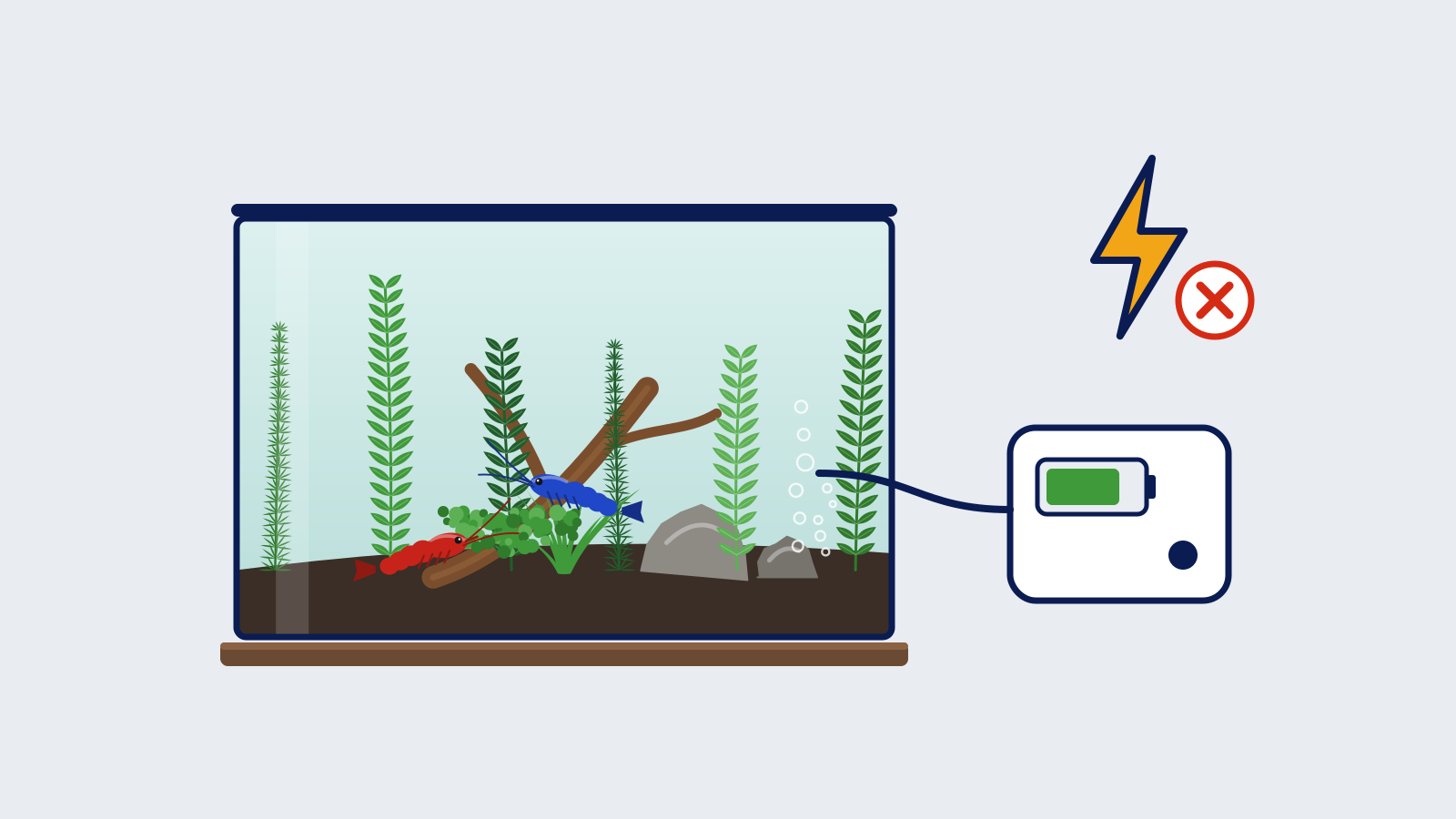
When the power goes off on a hot afternoon, the fan stops and the room heats up. If you have a UPS or inverter, plug the fan and air pump into it. They use very little power. Otherwise a rechargeable fan is worth buying before June.
Read: Load shedding: keeping your tank alive through power cutsSigns of heat stress
- Shrimp crowding near the surface or climbing out of the water.
- Shrimp sitting still and pale, or not eating.
- Failed moults: a white band behind the head.
- Deaths overnight after a very hot day.
If you see these, cool the tank gradually using the steps above, add air, and stop feeding for a day. Message us on WhatsApp if you’re not sure what you’re seeing.